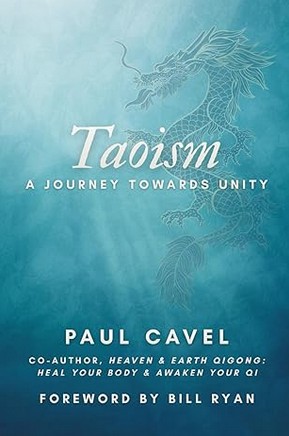
Reflections on Paul Cavel’s Taoism: A Journey Towards Unity and the Water Method tradition
Here in Chicago, winter includes cold, snow, shorter days, and longer nights. For me, an excellent time to catch up on my reading. One new book in particular I want to share with you—
Taoism: A Journey Towards Unity by Paul Cavel (2025)
Paul’s new book offers a thoughtful framework for understanding and embodying the Water Method of Taoism, a system of practice that strongly influences how I teach Tai Chi, Qigong, and meditation.
What Is the Water Method of Taoism?
The Water Method traces its roots to ancient China and has been passed from teacher to student for generations. Its emphasis is practical rather than theoretical: how to cultivate health, awareness, balance, and resilience in daily life.
Key principles include:
- Moderation rather than strain (what many of my students know as the “70% Rule”)
- Releasing unnecessary tension
- Direct bodily awareness instead of forced visualization
- Adapting to constant change
- Integrating physical, energetic, and mental development
These ideas are not abstract philosophy — they directly shape how internal arts like Tai Chi and Qigong are practiced safely and for maximum benefit.
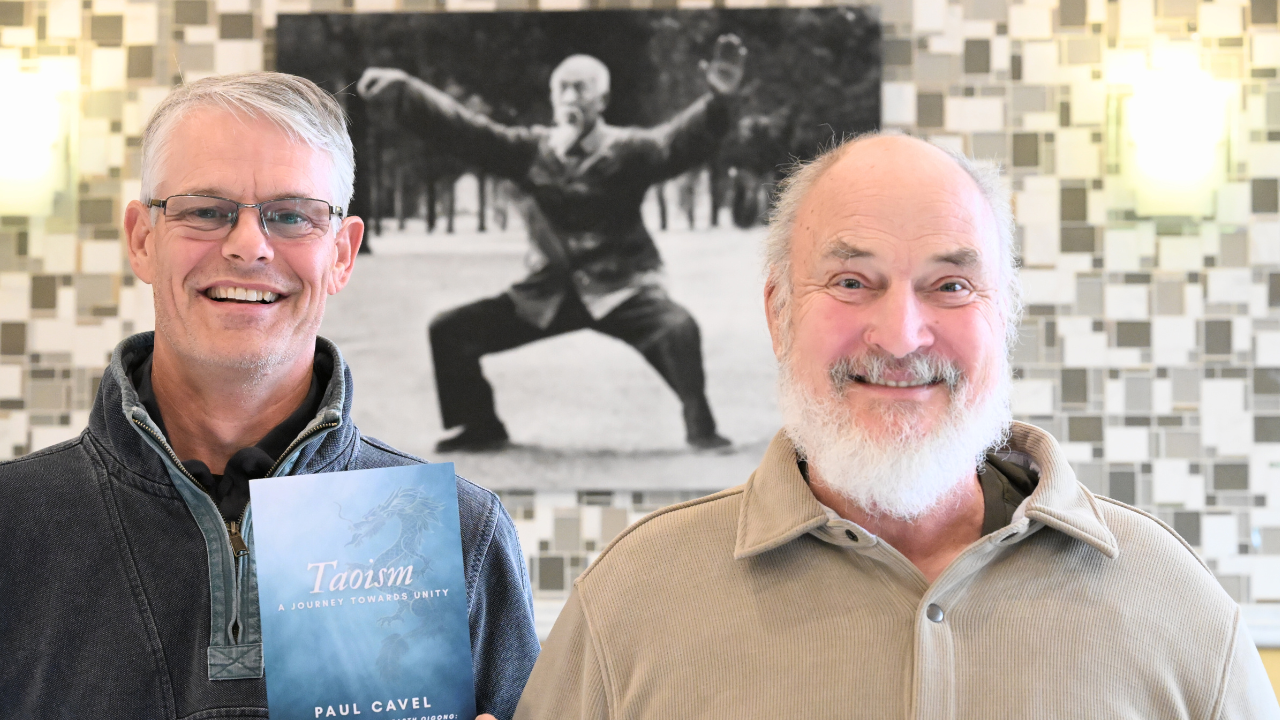
Paul Cavel with Master Bruce Frantzis; the late Taoist Master Liu Hung Chieh pictured in the background. Energy Arts Training Center, Longmont, CO.
The Lineage Connection
Paul Cavel is a senior instructor in the Energy Arts system founded by my primary teacher, Bruce Frantzis. Bruce trained extensively in Asia, eventually studying one-on-one in Beijing with the late Taoist Master Liu Hung Chieh.
That training included the Water Method teachings Bruce has shared internationally for decades. Paul has been teaching within this tradition for more than 30 years, offering instruction in Tai Chi, Bagua, Qigong, Neigong, and Taoist meditation throughout Europe and the United States.
I’ve benefited from Paul’s teaching for many years and had the pleasure of hosting his first-ever Chicago workshop last year.
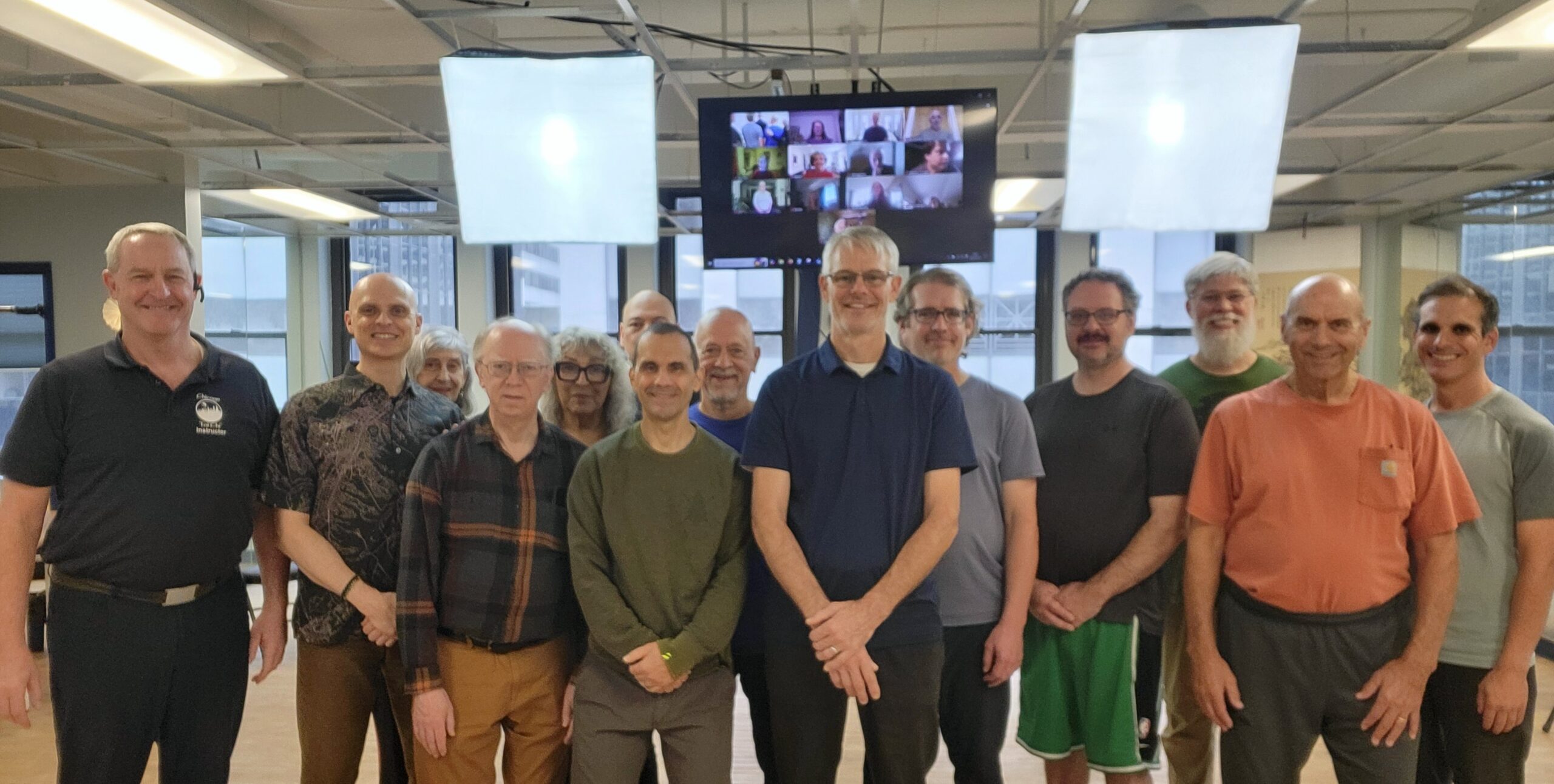
Paul’s 2025 Workshop at Chicago Tai Chi.
A framework for the Water Method
In Taoism: A Journey Towards Unity, Paul provides a clear structure and outline for understanding this tradition.
In this concise and accessible book (just 82 pages), Paul describes both the underlying theories and practical applications of key principles. These include:
- The principle of moderation (the 70% Rule)
- The importance of releasing and letting go
- The primacy of direct perception—feeling and sensing in the body—rather than visualizing or imagining
- The constancy of change and developing the ability to adapt
- Five Element theory—working with the elemental energies of water, fire, wood, metal, and earth
- The 16 Neigong—specific internal practices to develop the physical body, its energy, and ultimately, the spirit
- What Paul calls the “Energetic Matrix of a Human Being”
Even if these ideas are new to you, Paul presents them in a way that is clear and approachable.
Is the Water Method relevant today?
Paul’s book presents the Water Method as a living, evolving, practical tradition, connecting its principles and practices to what many people yearn for today, including:
- Developing a healthy body and mind
- Healing from injuries and trauma
- Cultivating greater balance and calm
As Paul writes, “Water Method Taoism is and always has been a pragmatic approach to health, healing, martial arts and spirituality, all a part of one continuum.”
I recommend this book to anyone curious about how ancient wisdom can support meaningful change today.
The book is available in both ebook and paperback formats.
Taoism: A Journey Towards Unity
Hear Paul Speak About the Water Method
If you’d like to hear Paul discuss these ideas directly, I recently recorded a conversation with him exploring Water Method Qigong and related principles. Click below to view Part 1.
👉 Secrets of Water Method Qigong | Interview with Paul Cavel
And, as Paul’s book underscores, the way to embody these ideas is through steady practice.
Warm regards,
Chris Cinnamon
Head Instructor, Chicago Tai Chi